
Health Flex Spending Account: HSA, FSA, HRA | What’s the difference?


What is a health flexible spending account?
Health flex spending accounts are a part of consumer-driven healthcare (CDH). As part of an employer-sponsored group benefit plan, participants fund flex accounts with pre-tax salary deductions.
Then, the employee can pay for eligible out-of-pocket medical expenses with a debit card tied to the flex spending account. If a debit card it not provided, the employee pays for the medical expense directly and then submits it for reimbursement through the plan.
There are three kinds of flex spending accounts:
Health savings account, or HSA
Health reimbursement arrangement, or HRA
Flexible spending account, or FSA
What do they have in common? Money deposited in these accounts goes in tax free., and goes out tax free to pay for eligible medical expenses.
Health Savings Account (HSA)
Health savings accounts are similar to a 401(k) retirement account for medical expenses. Participants must be covered by a qualfied insurance plan which can be a high-deductible health plan (HDHP).- Employee-owned health flex spending account.
- Anyone can put money into the account.
- Employee contributions can come from pre-tax salary deductions.
- Money put into the account that’s already been taxed (for example, money that was a gift), is tax deductible.
- Any balance in the account at the end of the year rolls over to the next, year after year, through retirement.
- Funds can be invested in an interest-bearing account.
- Often recommended by financial advisors as a secondary retirement savings account.
Health Reimbursement Arrangement (HRA)
A health reimbursement arrangement is an employer-sponsored group health benefit. It’s a fund that pays for eligible medical expenses not covered by the HDHP, such as deductibles, coinsurances or both. Other features of an HRA:
- Employer-owned health flex spending account.
- Employer decides which expenses are covered by the HRA.
- Money used to reimburse medical expenses is tax deductible for both employer and employee.
- Employer decides whether or not year-end HRA balances roll over to the next year.
- HDHP eligible.
- Funds in an HRA cannot be invested.
Flexible Spending Account (FSA)
What makes it flexible? It works with most of our other employer-sponsored health plans. Here are more facts about an FSA:- Employer owned health flex spending account.
- Both employer and employee can put money into the account.
- Employee contributions can only be made through pre-tax salary deductions.
- Optional carryover (up to $500) or grace period, determined by employer.
- Traditional health plan required unless combined with HSA or HRA.
- Funds cannot be invested.
Visit our Health Flex Spending Account product pages:
Download our brochures (no registration required):
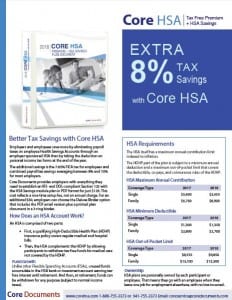
brochure
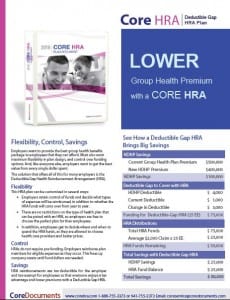
brochure
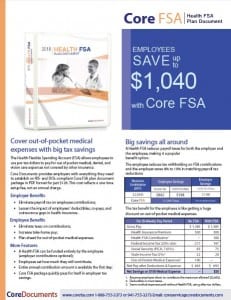
brochure.


